After 35 years of practising as a couple psychotherapist I now see couples for short term therapy.
"Seeking help to speak to a stranger about your most private and intimate relationship is a brave thing to do. As a couple-therapist I offer a space in which difficult feelings can be explored without judgement or blame so couples can find new ways of thinking and new strategies for enjoying their relationship."
Initially I offer an hour and a half consultation, this is an opportunity to explore what you are hoping for from therapy and what might be the best way forward. You will have the opportunity to discuss your situation, think more clearly about your relationship and why you are contemplating therapy now. If we all agree that short term therapy would be appropriate, I would be happy to see you for a further 8 sessions.
In many cases short term therapy is enough to help resolve immediate issues and clients often find that having had the experience of working with me they are more able to work things through together at home. It can become clear after 8 sessions that to continue with long term couple psychotherapy would be really helpful. Occasionally one or both members of the couple decide they would like to see an individual therapist. Whatever the outcome I will do my best to help you find a therapist to refer you on to.
— Pauline Hodson
Alumna, Tavistock Relationships
I have been working as a couple and individual psychotherapist in Oxford for over 35 years. My early work was with Relate (Marriage Guidance) followed by a four year training at the Tavistock Centre for Couple Relationships where I qualified in 1991 with a diploma in Marital Psychoanalytic Psychotherapy.
I have worked hard to promote couple psychotherapy both in England and abroad. When Chair of the British Society of Couple Psychotherapy and Counselling I initiated our first International Conference at Keble College Oxford and Edinburgh. With Professor Brett Kahr, I put on a Musico-Psychological evening, Couples in Counterpoint, at the Linbury Theatre at the Royal Opera House.
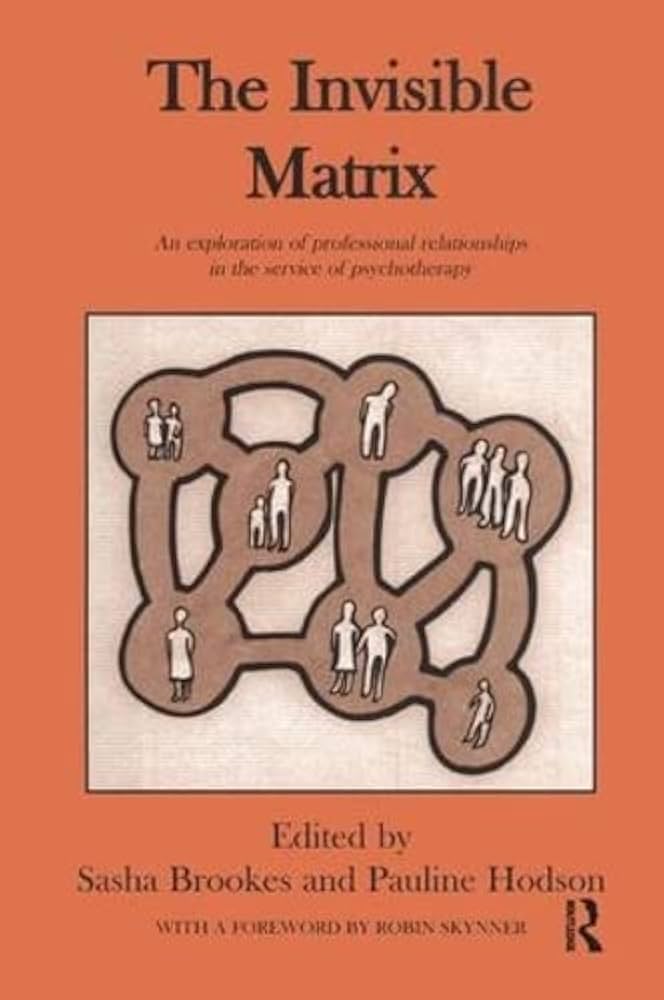
In 2004, working with twelve professional colleagues, I proposed, co-authored and co-edited The Invisible Matrix, an exploration of professional relationships in the service of psychotherapy (Karnac, editors Sasha Brookes and Pauline Hodson).
Since the movement started in 1988 I have been particularly interested in the emotional and psychological aspects of people working from home. In 1998 I presented a paper "Bringing Home the Electronic Baby" at European Conferences in Stockholm and Vienna.
I have written articles for the Swedish magazine Distans and other publications on the emotional effects of Teleworking. Thirty-two years on, the Covid pandemic has made working from home a fact of life.
Currently I am particularly interested in working with older couples and have presented papers on this subject in America and Europe. Two papers have appeared in the BSCPC Journal, Couple and Family Psychoanalysis.
I have been supervising couple therapists and counsellors for 25 years and offer both weekly and fortnightly supervision.
Since training at the Tavistock Institute for Marital Studies my entire career has been focussed on the couple. I enjoy helping individual psychotherapists develop an understanding of the fascinating dynamics of couple relationships. In the consulting room I welcome two individuals, but my client is the relationship between them. Helping a therapist to focus on the relationship rather than the individual is crucial to working with a couple and creates a dynamic in the consulting room that is very different to working with an individual client.
"People are attracted to each other and become a couple not only for the obvious reasons but for hidden, unconscious reasons — the unconscious fit, of which we only catch glimpses. When we become a couple we create something greater than the sum of two people. We create a new entity."
— Pauline Hodson
Alumna, Tavistock Relationships
Are you a couple? Are you married or engaged? Are you an item? Are you in love? Are you in a relationship? These are all questions which tell us that being a couple is more than just being friends and more than simply having a sexual relationship. When we become a couple we create something greater than the sum of two people. We create a new entity. That such a union is powerful and important is shown by peoples' commitment and desire to be a couple, and is evidenced by the pain caused if it fails and breaks down.
We know the conscious ways in which people become a couple. We are attracted to a person, we feel safe with them, we feel excited by them, we feel that we can tell them everything and can be known by them. But why does this happen with this person rather than that?
People are attracted to each other and become a couple not only for the obvious reasons but for hidden, unconscious reasons — the unconscious fit, of which we only catch glimpses. We may want to put right something from our past and feel that this person may help us. There may be a part of ourselves that we are too frightened to express — which this other person expresses with or for us. Many of the reasons for forming a couple are hidden in our unconscious, inner world.
When we become a couple, when we fall in love, we invest part of ourselves in a new, shared identity. It becomes the locus of our greatest intimacy, our greatest safety and, although we might not notice, it becomes the place of our greatest challenges.
It is as if the couple creates a psychological container, which holds all our hopes, fears and desires. We want our relationship to last for ever and cannot imagine anything could change that desire. We acknowledge difficulties may threaten us, but we don't quite believe that they will.
When our relationship works it allows for an immensely creative life, but the vicissitudes of life can sometimes place an enormous strain on a couple. The longed for baby is both a delight and an intrusion; the lack of a pregnancy challenges both our physical and emotional potency. A serious illness, redundancy, children leaving home and retirement are all life events which, either expected or unexpected, can place a strain on the relationship. Old age and death is the final challenge — one which will reflect the strength and robustness of a long lasting relationship.
It may be enough to find a friend to talk things through, or we may feel that we are placing too much of a burden on the friendship and decide to seek professional help in the form of counselling or psychotherapy.
Within the safety of the consulting room and with the attention of a thoughtful and benevolent therapist, there is an opportunity to understand the deeper, more unconscious blockages and patterns which link back into our earliest and most powerful emotional experiences. To explore our individual psychological patterns in the presence of our partner takes courage, but through clearer mutual and individual understanding, a couple often finds new ways of thinking and new strategies for enjoying their relationship.
Seeking help to speak to a stranger about your most private and intimate relationship is a brave thing to do. As one client said to his partner, 'I don't want to leave you, but I want to be able to say that I want to leave you.' An illustration that words do not have to lead to action and that ambivalence is part of our human condition.
As a couple-therapist I offer a space in which difficult feelings can be explored without judgement or blame. I do not give advice but provide a safe and informed place in which a client can develop a clear understanding about what is happening in both her inner and outer world.
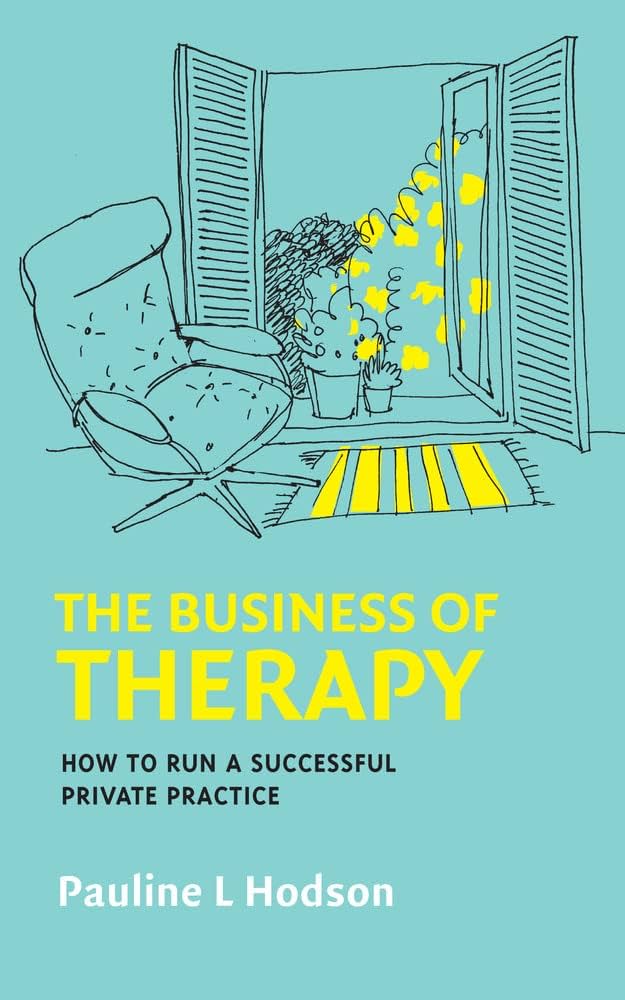
Published in November 2012, this book is filled with important information for the experienced or newly licensed therapist. Addressed primarily to psychotherapists and counsellors, practically every page applies equally to the practice of complementary medicine.
"Essential reading for these practitioners. For it teaches, in far more depth than their training ever does, just what it means to be a therapist."
— John Hamwee, Acupuncturist
Both therapists and patients operate in a wonderfully complex web of relationships — a formative field as powerful as it is unspoken. This field is as strong and powerful as the unconscious itself.
The book demonstrates how the web of relationships in the wider world shapes our behavior in the consulting room. We are much more social than we might like to believe.
Karnac — Edited by Sasha Brookes & Pauline Hodson
Read More →Below you will find papers I have written. The links will take you to the text of the paper itself, in full.
Please contact me by telephone, post or e-mail. I look forward to hearing from you and will do my best to respond promptly.
Whether you are seeking a consultation, supervision, or have a question about my books and papers, I welcome your enquiry.
— Pauline Hodson
Alumna, Tavistock Relationships